Author: Jeremy Bunce

  • HOME IS WHERE I WANT TO BE…

    HOME IS WHERE I WANT TO BE…

    An exhibition of drawings at the i:cat gallery, Vientiane, Laos

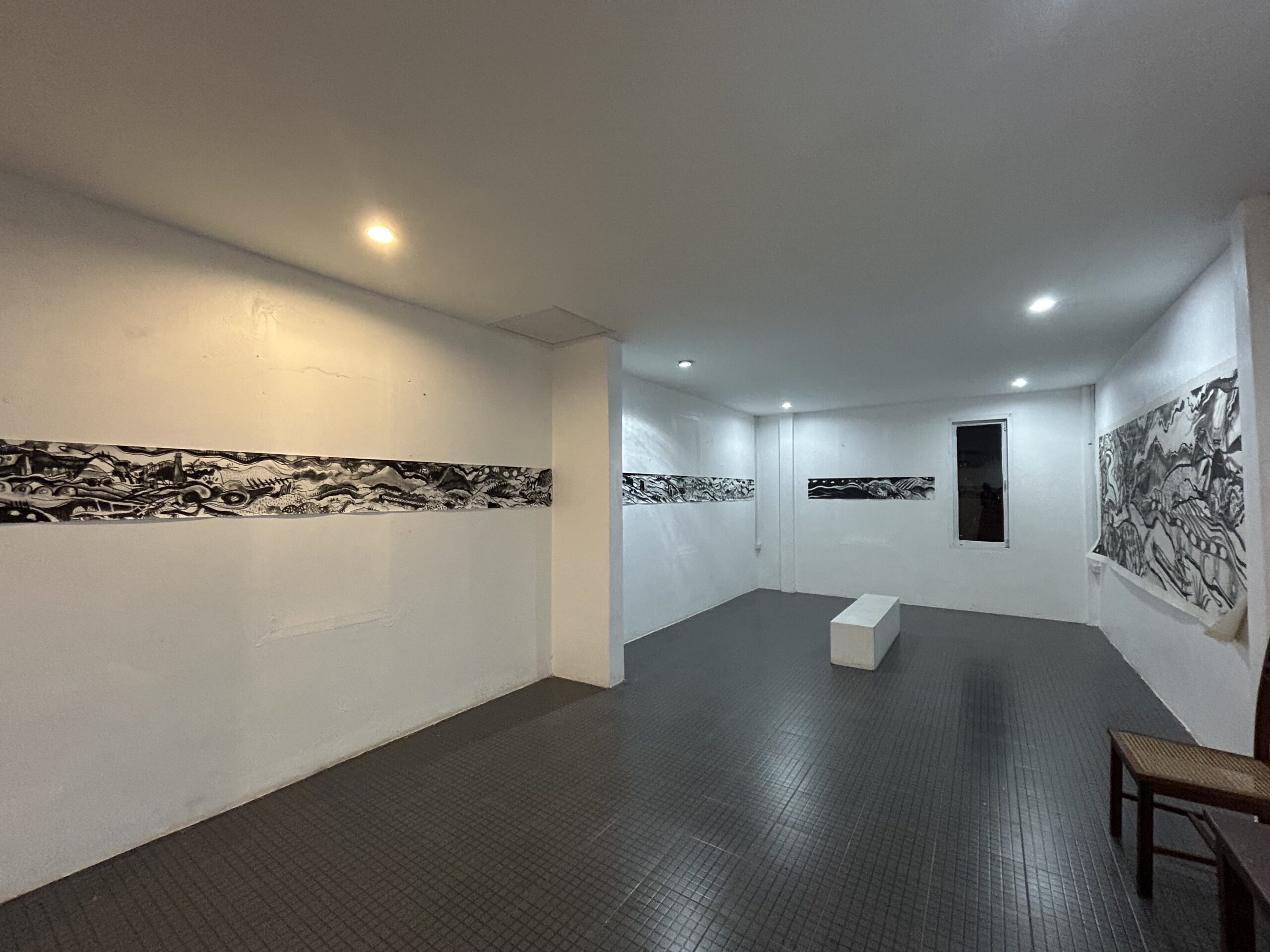
    In Home is where I want to be…, UK artist Jeremy Bunce presents a body of charcoal and graphite drawings that explore what it means to feel at home and belong – to a place, to a moment, or to a memory where borders merge. Working both in Cornwall where he lives and Laos, Bunce draws from the restless space between home and far from home, tracing the thin, shimmering boundary where one world dissolves into another.

    These works are not landscapes in the traditional sense. They are evocations rather than depictions, spaces sensed rather than seen that reference the past histories and possible futures of a place. Charcoal and graphite – materials that smudge, blur, and layer – become perfect instruments for exploring these merging and overlapping moments.

    Bunce works rhythmically, sometimes slowly and thoughtfully, at other times in fast bursts. He allows thought and instinct to alternate, to collide. Each mark acts as both gesture and reflection – thinking and not thinking, allowing the uncertain terrain of memory and imagination to lead.

    At the heart of this exhibition lies a tension between presence and absence, between where we are and where we long to be. Time gathers in the drawings like mist – layers of charcoal or graphite recalling the layered experience of living between two cultures, of missing one place while inhabiting another. In this way, he reimagines what home is and what it could be – illustrating the longing for a future home that will make our present moment beautiful and whole, without forgetting the scars of our past.

    Home is where I want to be… invites viewers to immerse themselves in these imagined places and dwell in the ‘thin space’ between worlds – where the tangible and the imagined co-exist, and where art becomes an act of bringing into being a semblance of a longed for home that does not yet exist, yet somehow feels deeply familiar.

    Sliding up Mountains. Charcoal on cartridge paper 426 x 31cm
    Thin Space. Charcoal on cartridge paper 337 x 31cm
    Pakbeng to Poldice. Graphite on cartridge paper 328 x 31cm
    Billy Bray in my Garden. Charcoal on cartridge 162 x 29cm
  • Art Residency – Vientiane, Laos – Dec 2024

    Art Residency – Vientiane, Laos – Dec 2024

    Life can be full of surprises.
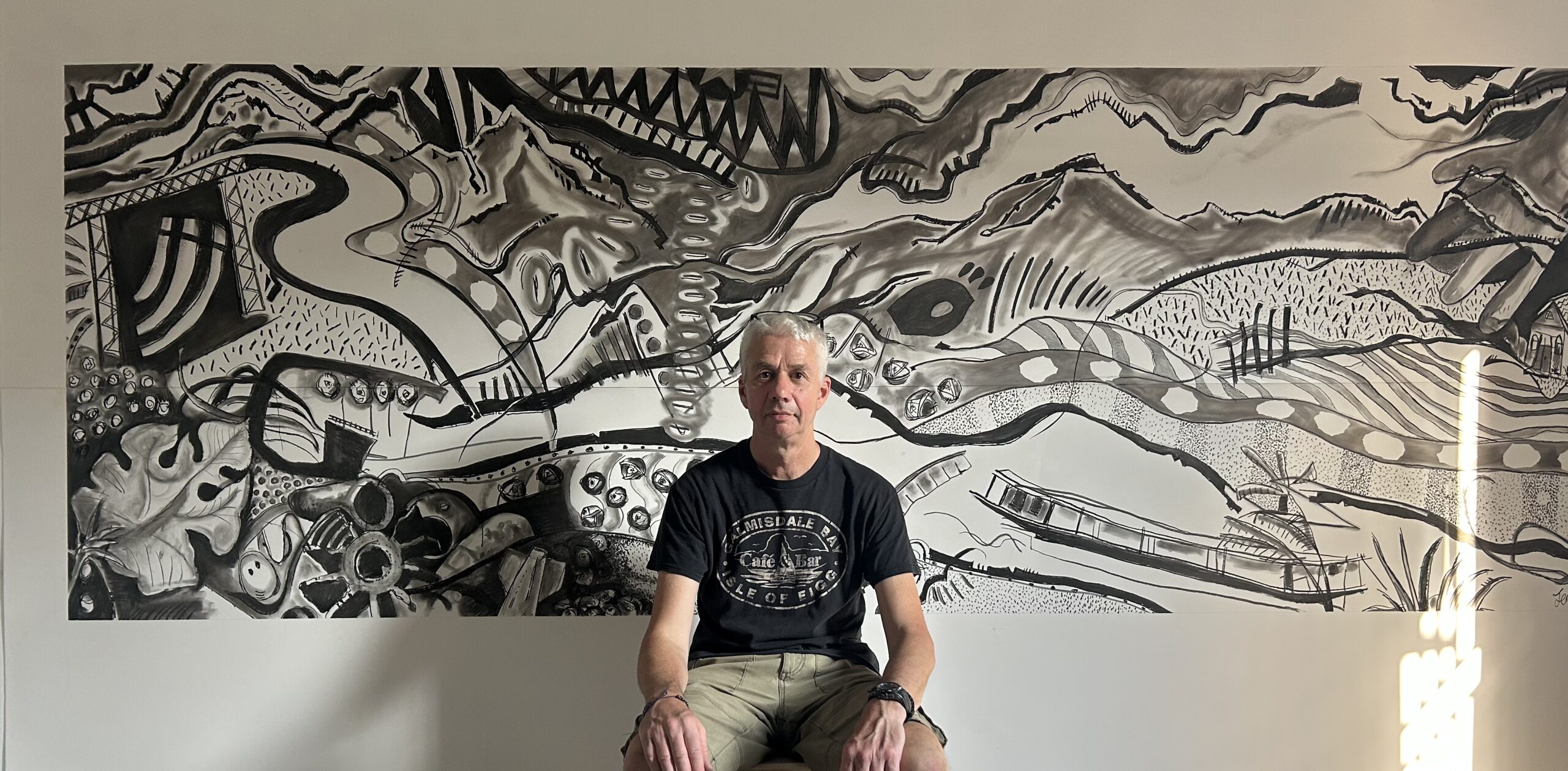
    If you’d told me 2 years ago I’d have an art residency in a gallery in Vientiane the capital of Laos, there’s no way I’d have believed you. Yet a few months later, I found myself cycling through the bustling, potholed streets of one of my favourite places on earth, with charcoal, fixative and a gallery front door key in my backpack, on my way to complete a 4.7m wide charcoal drawing in one room of the i:cat gallery downtown Vientiane.

    “Meet the artist at work”, the publicity stated. More than once, with dance music pounding through headphones, I glanced round to find a tourist, a Lao art institute student, or curious passerby off the street standing behind me as a I paced (one might even say danced), charcoal in hand before the 4.2 wide x 1.2 tall sheet of paper mounted on the wall. Check out this short vid recording the four days it took to complete the drawing in the gallery. Let me know what you think in the Comments section below.

    When working on such a large scale, the process of drawing is very physical, almost a dance.

    In the early stages, I employed the use of a bamboo stick to enable me to simultaneously stand back to see the work, while at the same time, make large gestural marks across the white paper. The title of the drawing is “Slowboat” – my two friends and I had taken the slowboat from Huay Xai to Luang Prabang the week before arriving in Vientiane.
    Below are some images of the process of my time in the gallery through to the drawing’s completion. I returned to the UK on December 7th leaving “Slowboat” on display in the i:cat gallery through to the new year.
    I’m very pleased to announce that I will again be showcasing more of my work at the i:cat gallery in November 2025. Watch this space for updates.

  • My Painting Process

    My Painting Process

    A finished painting is the result of a journey involving many twists and turns.

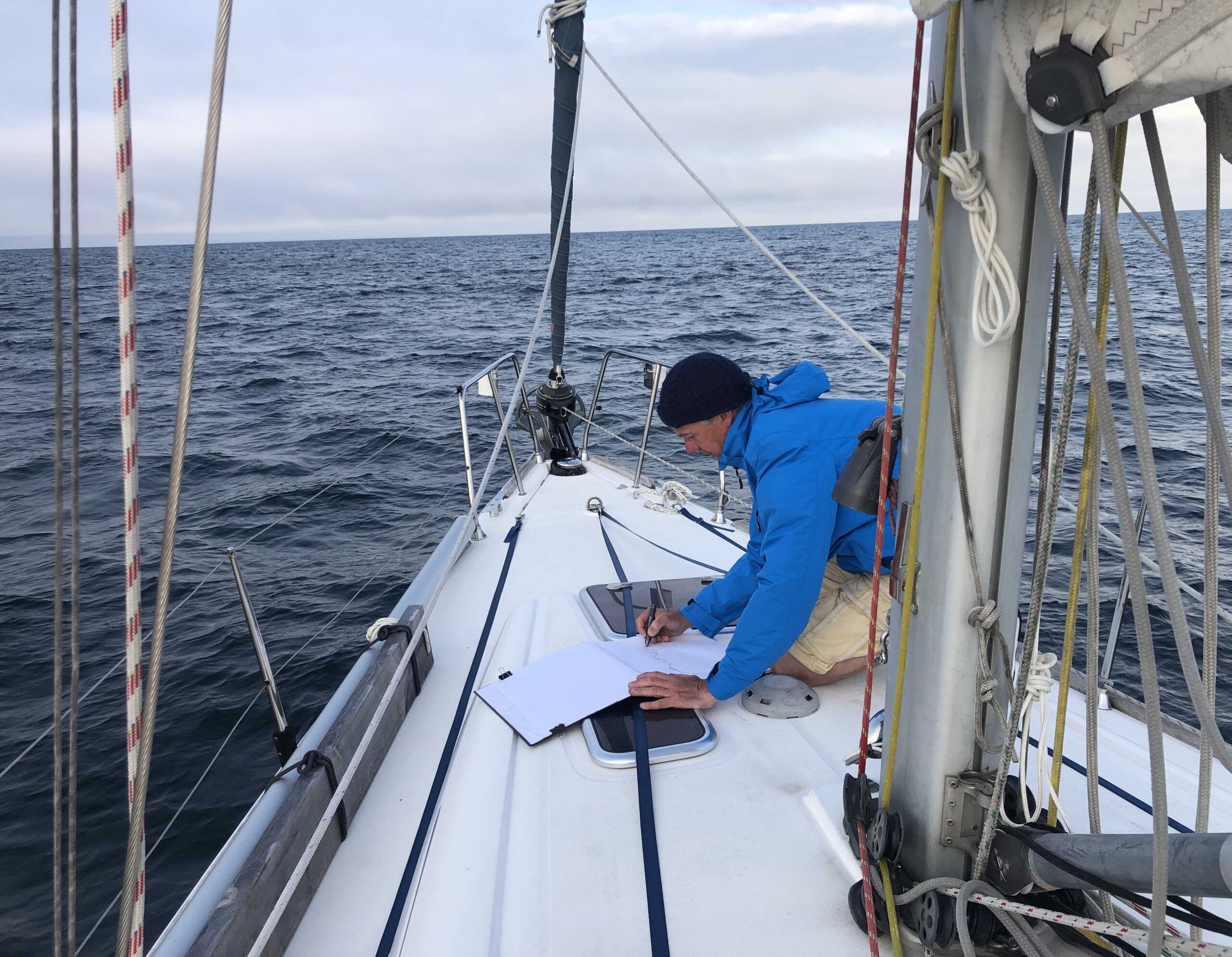
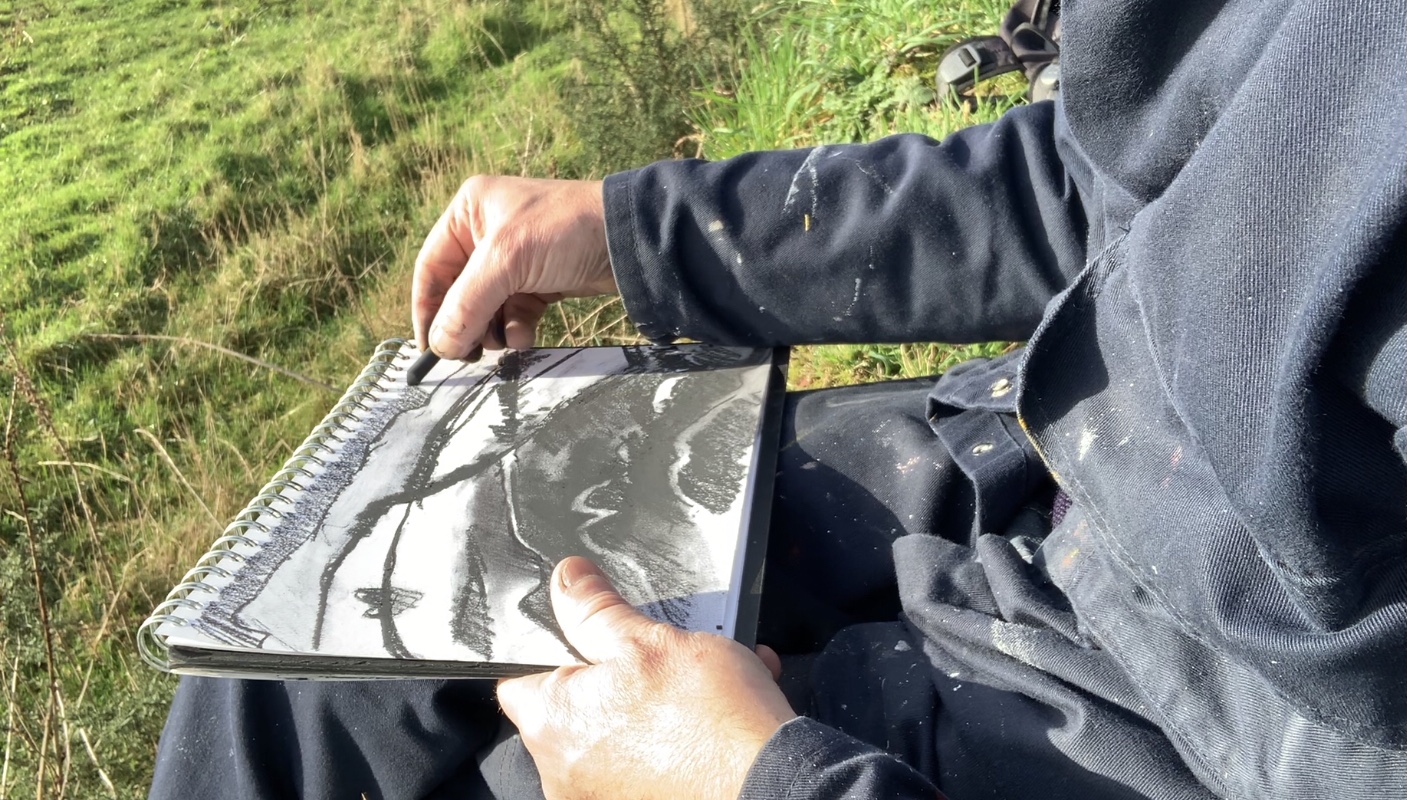
    I generally carry a sketchbook and pencil with me when travelling or out on a walk. Most of my paintings can be sourced back to one or more of these sketchbook drawings.

    Sketchbook drawing of the Nam Khan river in Luang Prabang 2019

    My work is generally a response to place. Yet a place is so much more than just what it looks like. How does a place make me feel? What is on the surface? What is under the surface? Painting offers me the creative freedom to explore beyond what can be seen by the eye, to discern the unseen, the intangibles and the possibilities of a place. The multi-layers that lie under surface level vistas, as well as the initial visual reflections. I will often reference the history of a place. What has happened and what is happening in a place? My work allows me to even envisage its potential future.

    In his wildly imaginative description of England in The Last Battle, C.S.Lewis wrote:
    “…you are now looking at the England within England, the real England just as this is the real Narnia. And in that inner England no good thing is destroyed.”
    Perhaps I am also looking for the within, the real, the inner.
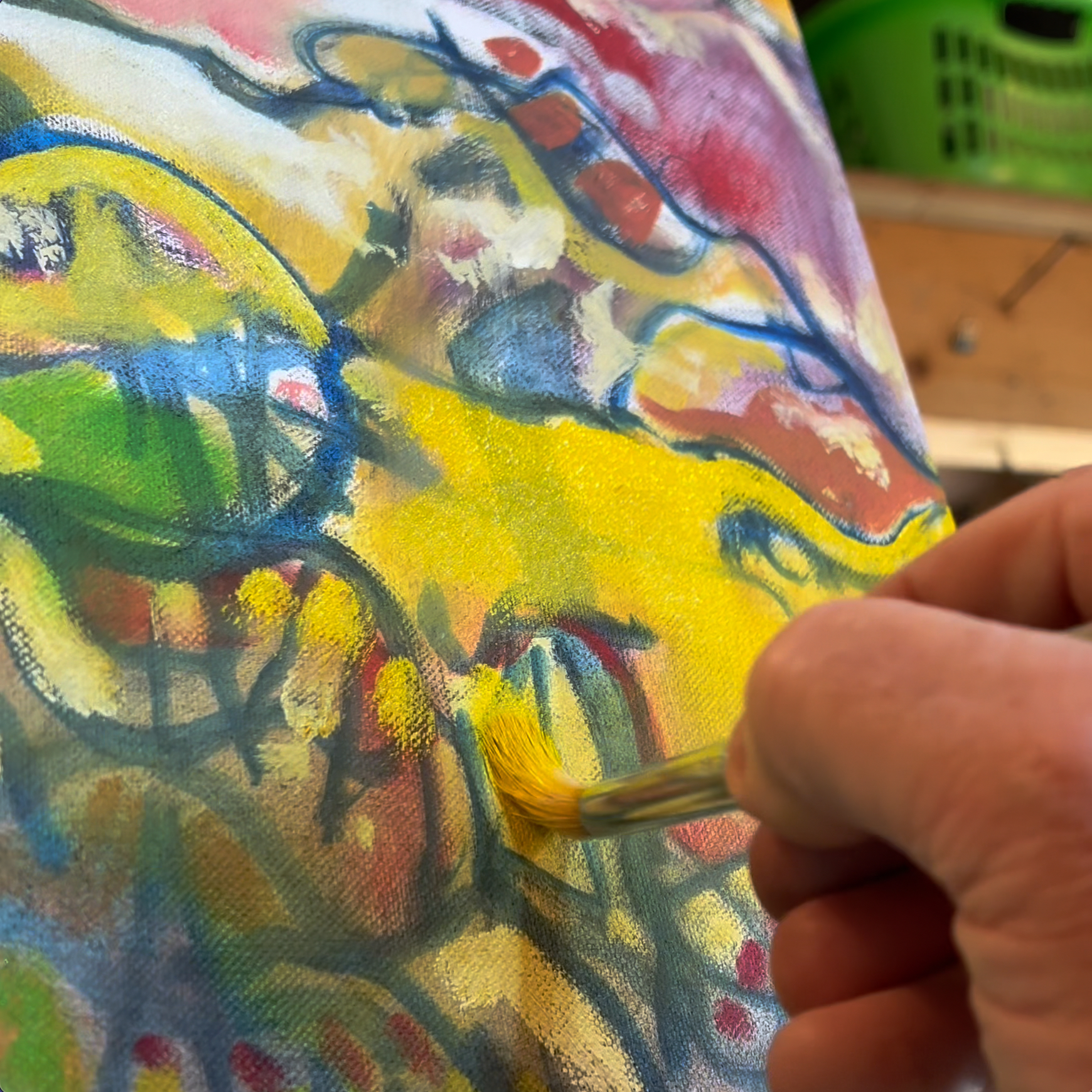
    My current practice resists setting a determined course to a precise visual destination. Instead, working prayerfully and imaginatively, I seek to enjoy the colours and textures of the paint itself, in the same way as a musician is drawn to sounds, and a poet loves the rhythm and shapes of words. Embracing creative detours, unexpected turns and impulsive directional decisions, I am conscious that I’m creating something utterly unique. Something that’s never been seen before.

    Working in oils on a current large painting. To see the whole unfinished painting, see end of this post.

    How long?
    More often than not, my paintings take weeks, usually months, and sometimes even years. At any one time, I have a few paintings on the go.

    The three images below show the progress of my painting “Further In” from one of the initial drawings, early stages in studio, to finished framed painting.


    I am fortunate to have a studio I share with my artist wife in our garden. At the end of a day of painting in the studio, I usually take the work off the easel, carry it into the house, and mount the unfinished painting on a wall inside. This gives me a chance to really stand back from the work, and see it with fresh eyes, perhaps over a few days.

    “Slow boat to Luang Prabang” (Unfinished )
    1.4 x 1.0m oil painting based on a series of sketchbook drawings while taking the slow boat to Luang Prabang in February 2024.
  • Art Residency – Hebrides

    Art Residency – Hebrides

    Camerawork: (mainly Neil Caie)
    Edit: Jeremy Bunce
    Music: Jeremy Bunce

    Scattered off the west coast of Scotland, the Inner and Outer Hebrides islands are both rugged, and stunningly beautiful. Imposing grey cliffs drop severely down to either crashing seas, or serene turquoise waters worthy of the Caribbean.

    This collection of countless islands and islets, many uninhabited, are best seen from the sea, and in June 2023 I was able to secure an art residency sponsored by the excellent Sputnik Arts Network to sail around the islands and make art, either from the deck of a 6 berth yacht, Agape, or when ashore. (Sputnik, based in Birmingham exists to encourage, connect, celebrate and fund christians who work in the creative arts).

    Keeping things simple, I decided to just take an A3 sketchbook, charcoal, pencils and graphite sticks plus basic (perspex sheet, cartridge paper, masking tape, ink and ink rollers) to make monoprints. The plan is to take these drawings and prints and develop them in the studio back home. Over the two weeks I created around 40 drawings and prints.

    The weather was mostly the perfect combination of sun and a decent breeze for sailing. The original plan included sailing to the remote island of St Kilda, 40 miles west-northwest of North Uist, but weather, tides and timings wasn’t going to make that possible. It soon became apparent that there was more than enough beauty and places to explore within the Inner and Outer Hebridean islands. We did in fact barely scratch the surface. I hope one day to go back.

    Monoprinting on a sweltering day on North Uist. Click here to see final print.
    Rona (I think?).
    Neil (in foreground), Richard and myself on helm.
    Skipper John and Paul below deck while I am on helm.
    Most mornings started with drawing early on deck.


    Click on the images below to purchased in my shop.

  • “Poldice Reimagined”

    “Poldice Reimagined”

    There is no one way to start a painting. This movie shows how my 120 x 40cm oil painting “Poldice Reimagined” began it’s life outside on location overlooking the Poldice Valley near my home in Cornwall. Once back in the studio it rested against the wall for a few months before completion.

    Here’s how it ended up.

  • Ugly art

    Ugly art

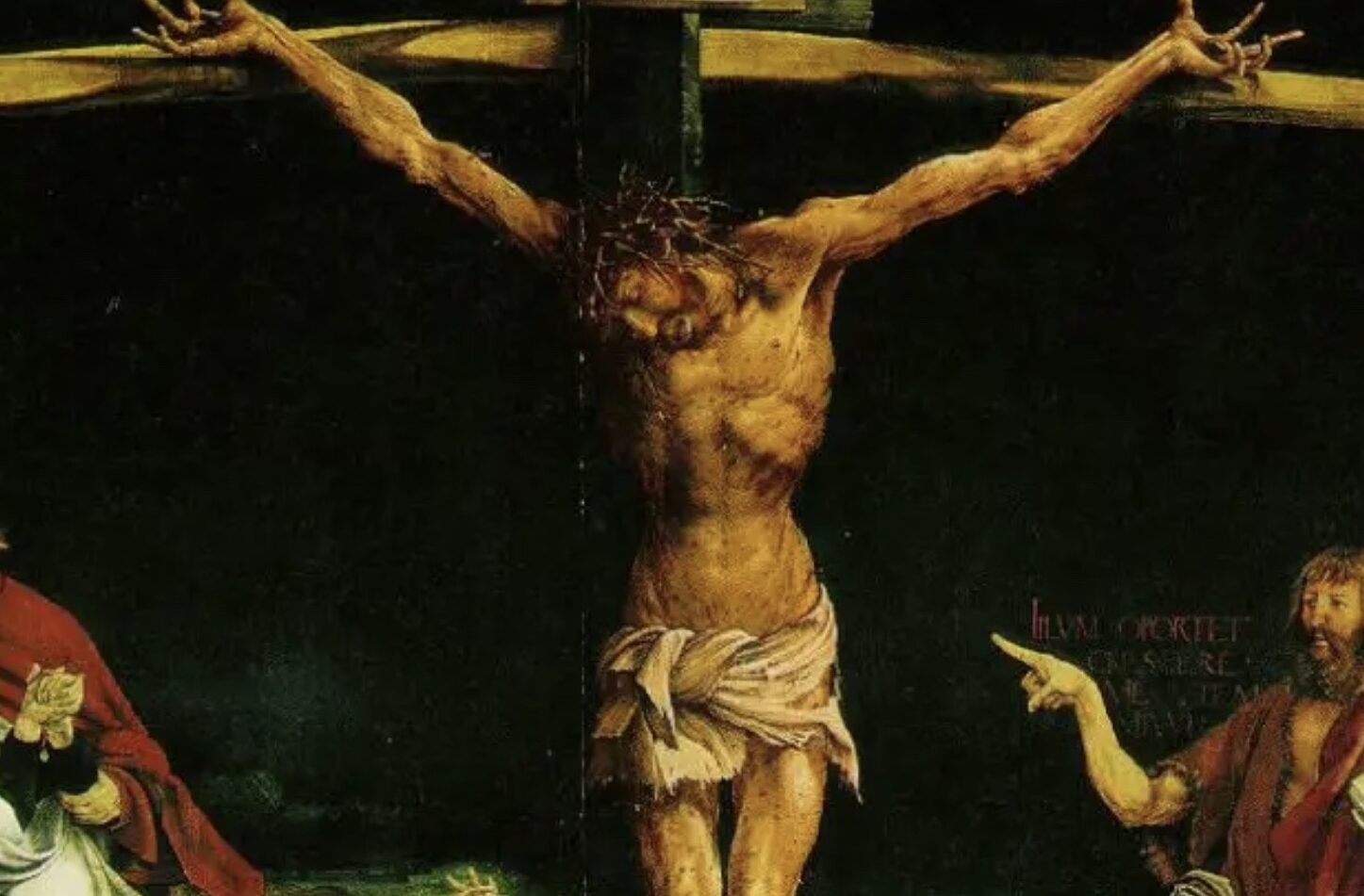
    There’s a man in heaven with ugly wounds in his hands, feet and side.

    This shocking, stunning painting was part of the Isenheim Altarpiece painted by Matthias Grunewald. It hung in the hospital chapel of St Anthony’s monastery which specialised in the treatment of painful skin disease. Grunewald depicts Christ’s body covered in sores – a sign to the hospital patients that Christ shares in their afflictions.

    If art is to be a mirror to our world, should it always be beautiful?

  • Studio assistant

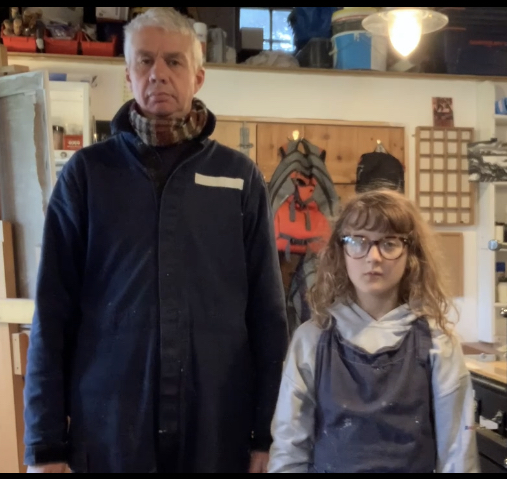
    Studio assistant

    Print day in the studio with superb studio assistant granddaughter Queenie.
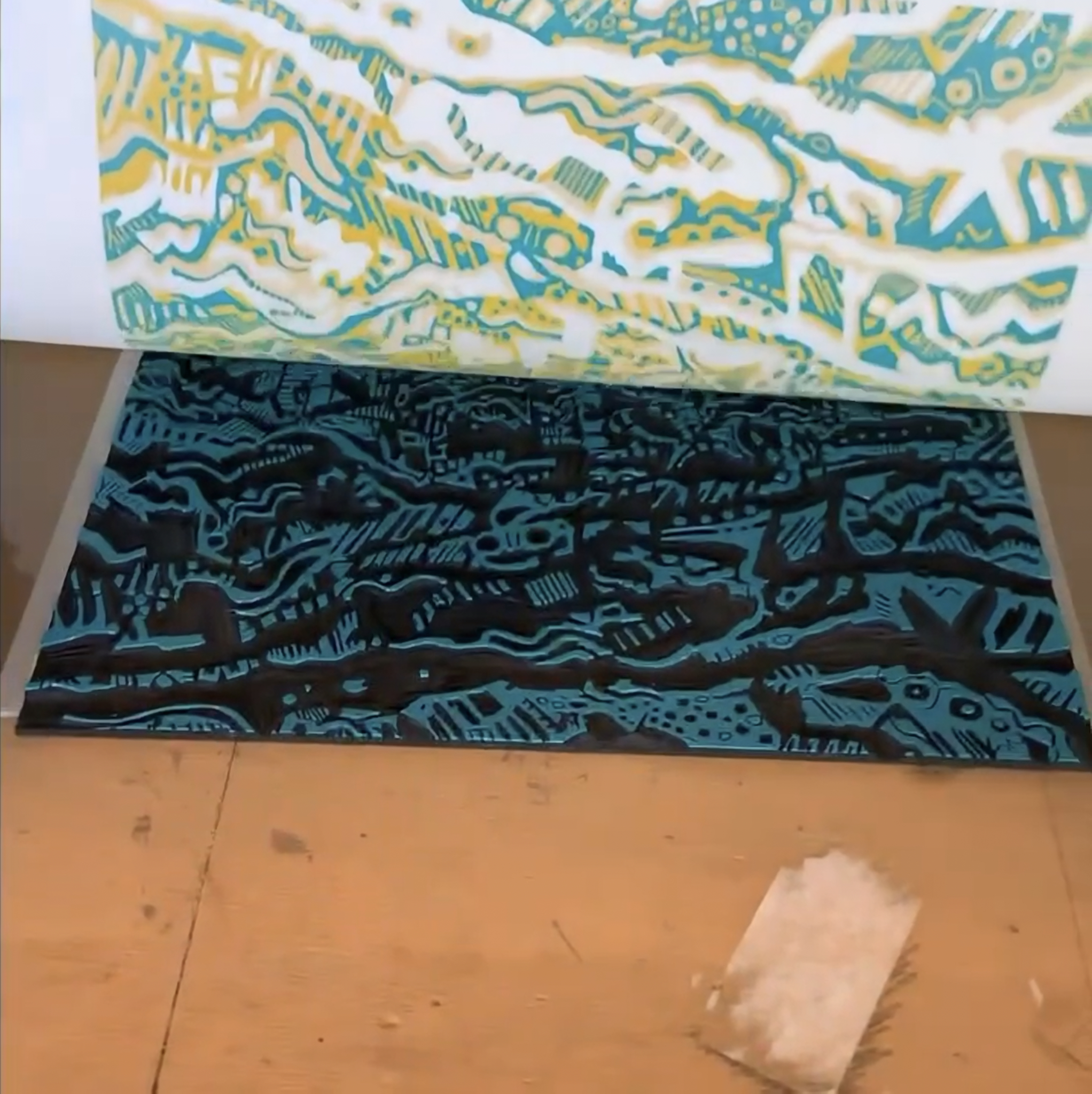
    I inked up the plate. Queenie (aged 9) ran each of the prints through the press.
    Note the care with which she handles the lino plate and the prints themselves.

    We were working on the “Nam Khan – series 1” reductive lino, available in my shop.
    This is a variable edition of 16 prints – which means even though the same piece of lino is used throughout, its inked up slightly differently each time. This means therefore that each individual print is unique.

    The prints stem originally from a quick drawing in my sketchbook made in 2019 while sitting in a cafe in the beautiful ancient city of Luang Prabang in Laos. The Nam Kham river flows into the mighty Mekong river in Luang Prabang creating a peninsula full of temples and beautiful french inspired architecture.

    “Nam Khan – series 1” 3/16 V/E
    The original quick sketch – pencil on A4 cartridge paper.
  • Wheal Maid linoprints

    Wheal Maid linoprints

    I’ve always made prints, mainly linoprints and monoprints. This year, after some strong encouragement from various printmaker sources, including my wife Debbie, I decided to explore deeper the printing process to compliment, as well as run alongside my drawing and painting practise. Having different projects running parallel alongside one another keeps me from getting into creative ruts. Most of my work involves process, so for example, while a painting is drying, I can turn my energies elsewhere.

    Starting simply, I decided to create a series of linoprints based on this drawing made earlier in the year. Its an A4 drawing in pencil of the Wheal Maid mine in the Poldice valley near where I live.

    This linoprint series is quite small – 20 x 15cm on Japanese Ho Sho paper. It’s a 4 stage reductive print, which means each colour layer is taken from the same piece of lino. Debbie loves the cutting stage, so I marked out each stage of the cut on the lino; she cut using specialist linocut tools; she inked up the lino; and then I printed.

    Here she is inking up the third of the four print stages before handing to me to use a homemade glass bead baren to make the print. You will see we adopted Ternes Burton pins and tabs to ensure accurate registration. You can buy them here.

    See the final print below.
    Available to purchase in my shop.

    Each of the 20 limited edition prints are individually numbered and signed.
  • First layer

    First layer

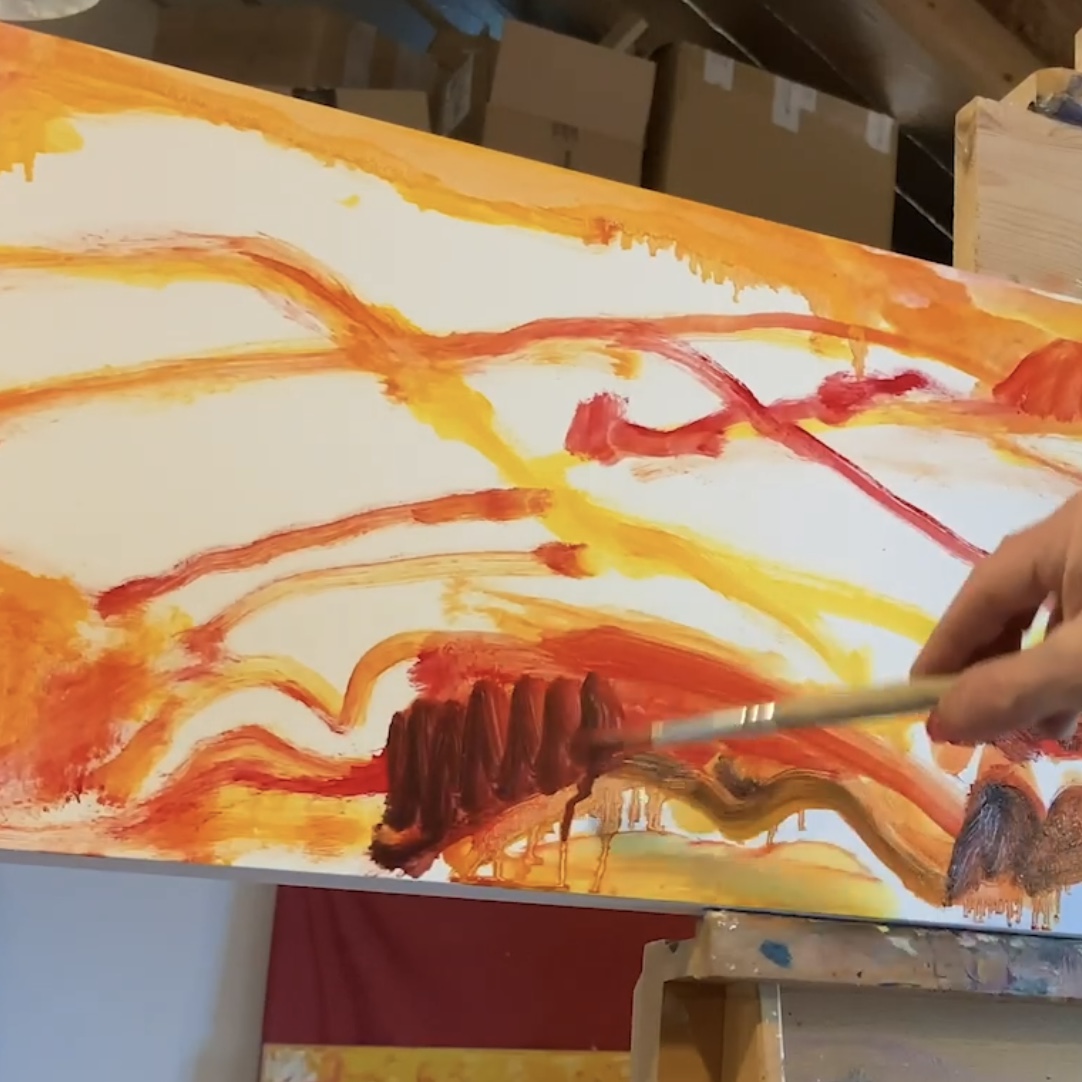
    When starting a painting I work fast. I might even set a time limit. Using basic colours thinned with turps, I avoid detail.
    The aim: to get the main shapes and composition in.

    Today’s new oil painting, based on previous drawings, is on prepared, primed board 122 x 28cm. Paintings generally take days, but some remain unfinished for months or even years.

    Sometimes painted in silence, sometimes to music, often with Radio 4, today I needed something pacey to keep the brush moving, so opted for new musical find, Southern Algerian band Imarhan. The rapid rhythm helped keep the brush moving. I probably worked at the easel for around 20 minutes.

    Then, music off, I took time to sit down and look – take in what I had painted. Tomorrow I start again with a long stare. The paint will still be wet enough to be pushed around on the smooth board with a brush or rag, or removed. Oil paint is very forgiving.

    I’ll then build up subsequent layers. My intention with this painting, which may change, is that first layers wont entirely be covered over or altered.

  • 5 x 5 = 25

    5 x 5 = 25

    Today I made 5 drawings in compressed charcoal on A4 sized charcoal.
    I allowed myself 5 minutes for each drawing. Total time spent = 25 minutes.
    Arbitrary?
    Possibly, but giving myself little time for each drawing ensures that I draw spontaneously. I work more from the gut than the head. Mark making is freer. Align that with the immediacy of the compressed charcoal medium, I create images that are put away after completion, and then looked at with fresh eyes in a few days. This allows for a greater degree of the unexpected – something that I’m particularly looking for in my work.

    Let’s see what they look like in a few days time.
    Thinking this may lead to a wide oil painting on board which I may start next week. Board is already primed.

    Ultimately these drawings, and this experience proved to be a significant resource in the production of this painting.

    Original oil painting on board based on drawings of the Poldice Valley in the mining district of central Cornwall in the UK. 122cm wide by 28cm tall.
    Poldice within Poldice
    Painting SOLD. Prints available in various sizes in my shop.
  • From kiln to cup

    From kiln to cup

    I take my role as kiln technician for daughter Holly’s pottery kiln very seriously. It sits in our studio – a classic Cromartie kiln from the 80’s. Holly and her pottery friend Rosa get to load it and unload it. In between, I get to turn it ON, turn it UP, and turn it OFF – sometimes at quite unearthly hours of the night!

    It’s a joy when Holly and Rosa turn up in Rosa’s wonderfully messy, beaten-up old Citroen, open the door of the kiln, and unload it’s precious, still warm contents.

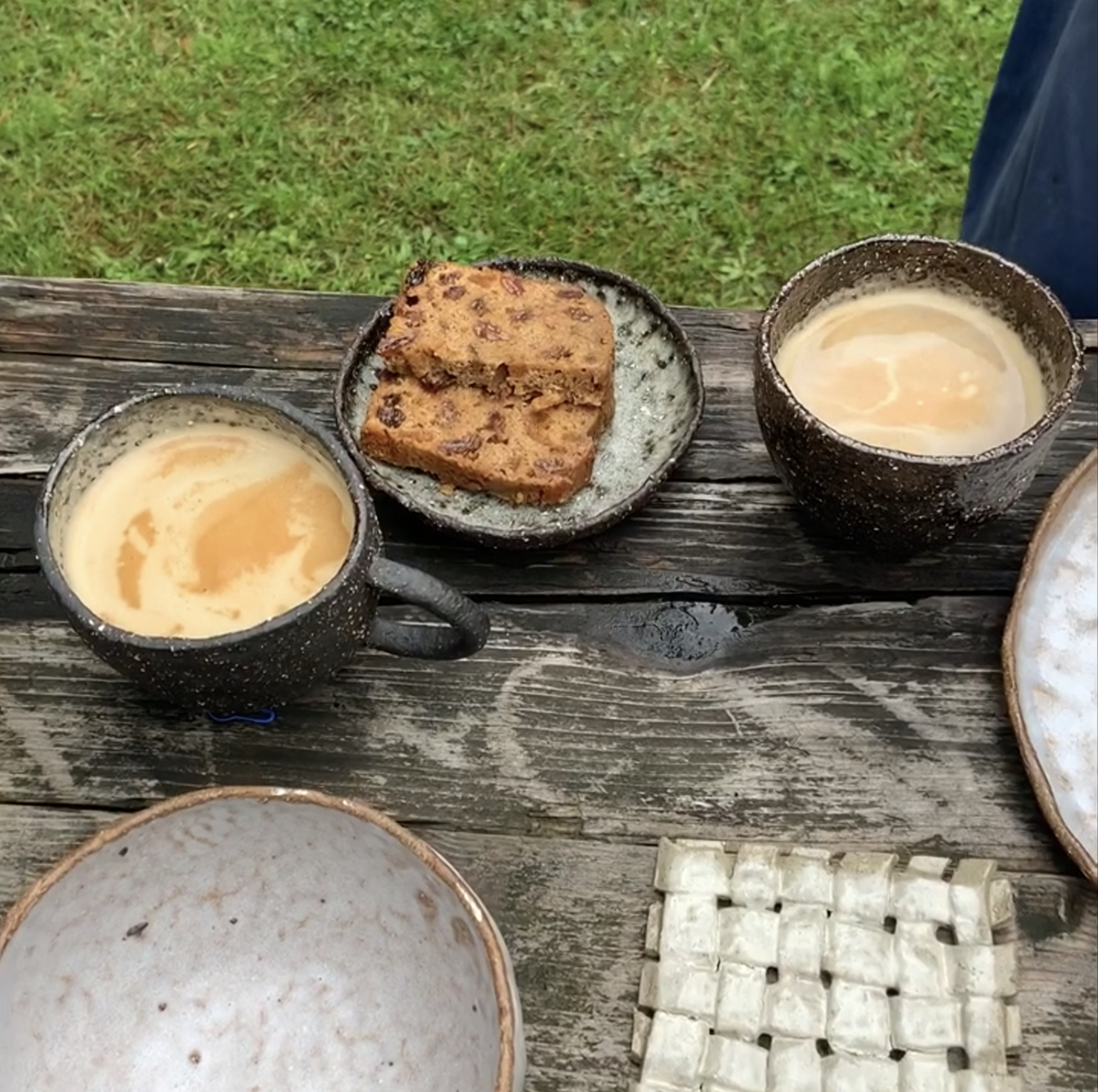
    They often make a day of it, bringing lunch, and glazing up or loading the next batch. This particular day was a much more hurried affair. But included two oatmilk coffees in stunning brand new cups fresh from the Cromartie! Plus cake of course!

    Check out Holly’s Instagram here.

  • Drawing makes me look

    Drawing makes me look


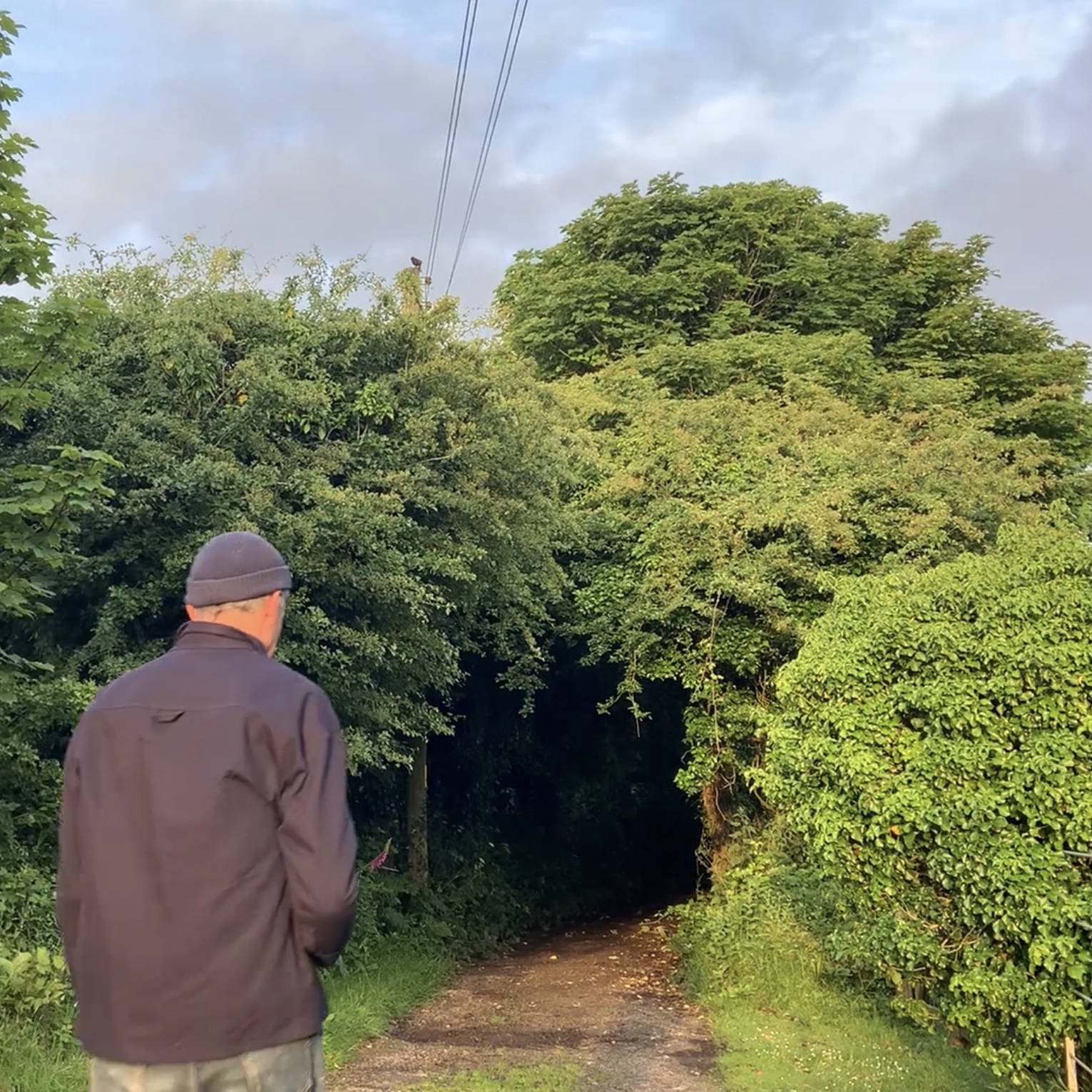
    Up early for walk and draw in beautiful Cornwall.
    We walk through life and we don’t see.
    The world is both beautiful, or ugly spoilt.
    The more I draw it, the more I see it.
    To look, to really look – that’s a big bonus.
    You can draw.
    If you can hold a pencil, you can draw.